
Alerts
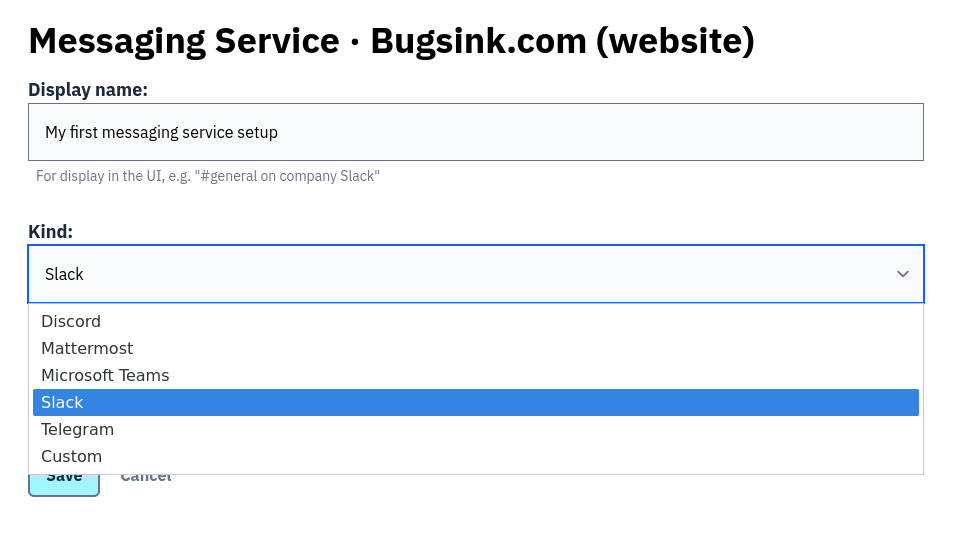
Bugsink alerts you when a new problem appears or an existing problem gets worse. Alerts can be delivered by email or sent to Slack, Mattermost, Discord, Microsoft Teams, Telegram, and custom HTTP endpoints.
When Bugsink sends an alert
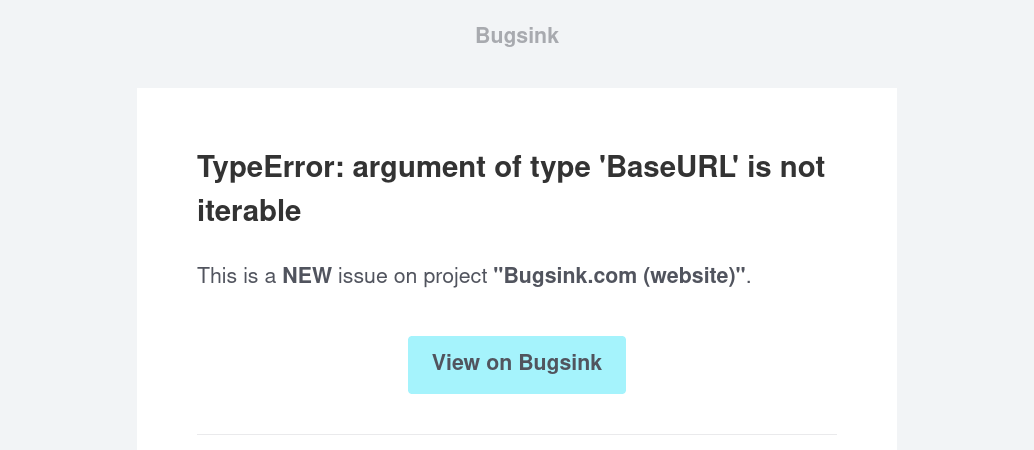
By default, Bugsink sends alerts for state changes that make things worse:
- New issue: the first event for a problem Bugsink has not seen before.
- Regression: an issue that was resolved occurs again.
- Unmuted issue: an event causes an issue to cross its time-based or volume-based mute condition.
These rules apply to both email and messaging-service alerts. Bugsink does not send a new alert for every event added to an already-open issue.
Email alerts
Email configuration is user-centric, so you can choose for which projects you want to receive alerts when this happens. Settings are resolved from the most specific level to the most general:
- Project level: choose whether you receive email for one project, or inherit the team setting.
- Team level: choose the default for projects in one team, or inherit your user setting.
- User level: set your global email-alert preference.
Chat and webhook alerts
Messaging services are configured per project, not per user. This makes the destination a property of the project: the chat tool controls who can see the channel and how its members are notified. You can configure more than one destination for the same project.
Add a destination in Bugsink
- Open Projects and select the project’s megaphone icon (Alerting Settings). You must be a project admin.
- Select Add and give the destination a recognizable display name.
- Choose the integration under Kind.
Connect and test the integration
The built-in chat integrations follow the same pattern: create a destination in the provider, then enter its webhook URL or bot credentials in Bugsink. Choose a provider below for the exact steps.
The Custom webhook option instead sends a JSON representation of the issue to an HTTP endpoint you control.




After entering the provider details, save the messaging service. Select Test in the messaging-services list and confirm that the message arrives at its destination.
Delivery failures and webhook security
If delivery fails, Bugsink records the most recent error on that messaging service, including the HTTP status and a limited copy of the response body when available. A successful delivery clears the failure state.
Webhook targets are validated before they are saved and again before Bugsink sends to them. For the outbound URL policy, allow/deny controls, and safe defaults, see Webhook Outbound Policy.